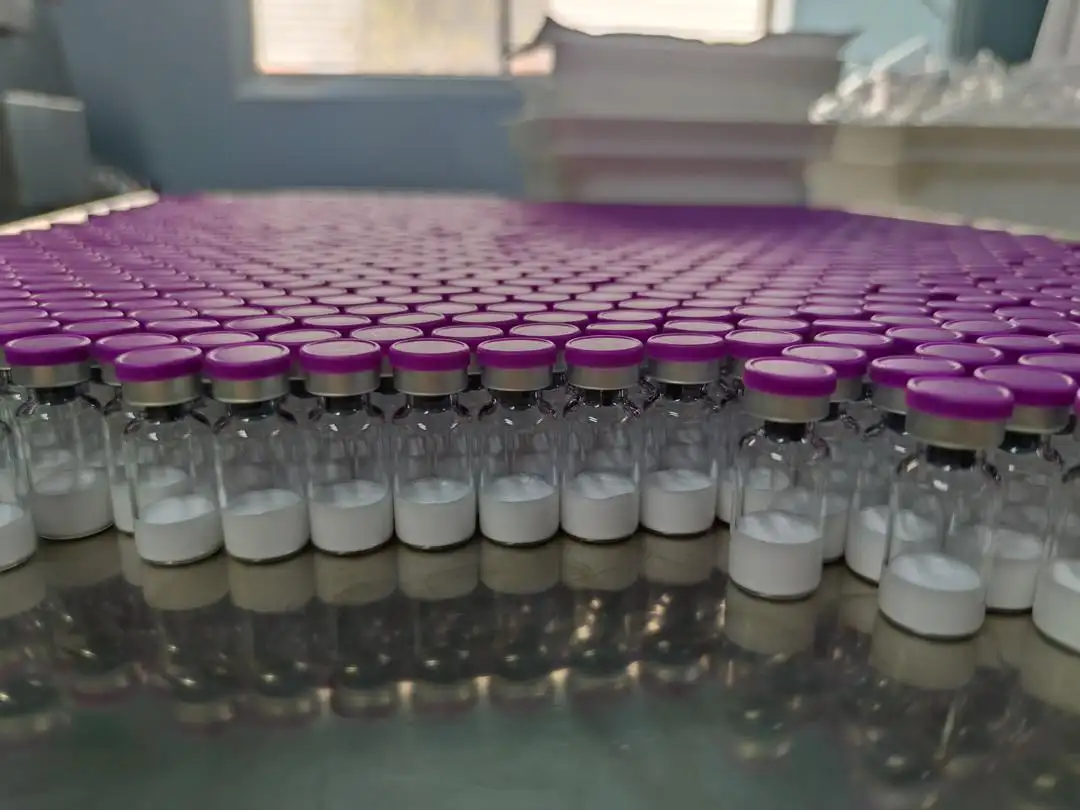
Lyophilized Peptide Storage: Temperature Level, Humidity, & Light
Peptide Storage, Managing & Stability Guide 2026 Luxara Study Business Aβ (1-42) is soluble in hexafluoroisopropanol (HFIP), DMSO, 0.1% liquid ammonia, 50 mM TRIS ∙ HCl, or 1 mM NaOH. Reconstitution in HFIP or DMSO takes some time whereas ammonia rapidly dissolves the peptide. The unpredictable solvent HFIP is usually vaporized leaving a deposit of monomeric, soluble Aβ (1-42), which can be reconstituted with the chosen buffer at pH 7.4 to induce fibrillation. Aβ (1-42) options in DMSO or aqueous bases can be diluted straight with a functioning barrier.
Clean And Sterile Research Laboratory Handling
The disulfide bond formation is fast at neutral or somewhat fundamental pH. Disulfide bridge formation is reversible. Peptide Research The disulfide bonds can be decreased at fundamental conditions using DTT. The pH 7-9.5 is the optimal pH range for decreases with DTT. The DTT options need to be freshly prepared since DTT is readily oxidized.
Area Temperature Level Vs Refrigeration
Constantly follow your pharmacist's instructions for dealing with and storage. Many BAC water is stored at controlled space temperature level unless your bottle's tag states or else. Duplicated freeze-thaw cycles can dramatically break down peptide security. For lasting preservation past 6 months, − 80 ° C storage space supplies remarkable stability protection. Extra ion-exchange steps are needed to make the acetate salt or HCL salt kind peptides. Some acidic peptides, containing Asp, Glu, phosphor team, or sulfotyrosine, can create salts with bases and may be given as ammonium salts.
Some scientists note vials with a tally after each access.For applications calling for several withdrawals from a solitary vial, vial adapters eliminate repeated stopper punctures.Aβ (1-42) remedies in DMSO or aqueous bases can be thinned down directly with a functioning barrier.This approach enhances stability and efficiency of a peptide remedy by stopping its direct exposure to moisture numerous times.Coring occurs when a needle puncture rubber instead of displacing it.In general, the time for a reconstituted peptide to be kept in the fridge varies from a few days to a couple of weeks, depending upon the peptide sequence and storage space problems.
Brownish or darker discoloration recommends a lot more extreme destruction or microbial contamination. Establish the vial apart, check regularly, and swirl delicately at each check. Some peptides stand up to dissolution in spite of correct method. Prior to concluding the peptide is harmed, try these interventions. Striking the exact same place repeatedly enlarges the hole and accelerates seal failure. The target ring on the stopper indicates the desired slit zone. Consensus-defined recommendation products areuseful for the harmonization of protein dimensions. Referral products that use areference measurement treatment to define their concentration are unusual. For purifiedprotein recommendation materials, the dimension procedure of choice is currently aminoacid evaluation. Yet it has to be done meticulously and with the right precautions. Unopened, unpunctured peptide vials can frequently be saved at room temperature level for a restricted time, relying on the particular peptide. Nonetheless, for lasting storage, many peptides ought to be cooled between 36 ° F to 46 ° F( 2 ° C to 8 ° C). Once it's time to make use of the peptide, reconstitution is performed to restore the peptide to a useful option
What negates peptides?
Salicylic acid''s scrubing activity might undercut the peptides, reducing their skin-repairing benefits. Suggestion: To prevent any type of interaction, use salicylic acid and peptide products at various times. For instance, integrate salicylic acid in your early morning regimen and peptides in your night routine.
At higher concentrations, surface area results become proportionally less important. Oxygen liquified in service and existing in vial headspace drives these reactions. Changing headspace air with inert gas slows oxidation significantly. For applications requiring numerous withdrawals from a single vial, vial adapters eliminate duplicated stopper punctures. These tools affix to the vial as soon as, developing a port for duplicated syringe gain access to without added needle sticks through rubber. In most instances, the objective of MRM assays isto determine the concentration of a target protein in a complicated mix. As discussedabove, the concentration of a proteotypic peptide freed in a protein digest maynot fully reflect the concentration of an undamaged healthy protein, particularly because of theheterogeneity of healthy protein isoforms in biology. The ideal container makes a significant distinction in peptide longevity. If refrigeration is routed, shop vials in a devoted, tidy area inside the refrigerator-- away from the back wall surface and not touching raw foods or liquids. When the tag allows room-temperature storage space, keep the kit away from warm sources (home windows, radiators, hot cars https://trentonphnv854.stonefielddigest.com/posts/verified-99-lab-grade-peptides and trucks) and out of direct sunshine. A basic storage protocol secures security, minimizes impurity direct exposure, and stops loss as a result of mishandling. As opposed to scattering supplies throughout cabinets, package your 30 mL BAC water, little GLP-1 vials, alcohol pads, and caps in a specialized situation so every product has a set spot. That consistency makes labeling, counting, and transportation fast and auditable while reducing accidental drops or spills. Changing in pH and salt focus will certainly modify electrostatic communications between charged amino acids. Importantly, the same possible restriction likewise applieswhen using isotopically-labeled healthy proteins as internal requirements. Amino acid evaluation of the high pureness and lower pureness peptide wasperformed to compare the amino acid material. Unlike the instance for high puritypeptides, the concentration of the wanted peptide can not be accuratelyquantified due to the existence of incompletely deblocked and abbreviated peptidespecies.